01304 827609 info@use-ip.co.uk Find us

Trunking question

badayuni92

Well-Known Member
Messages
59
Points
8
I’m unable to run cabling from the inside due to a combination of having various extensions built on my property, no cavity walls and not wanting to start lifting floorboards.

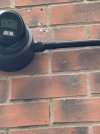
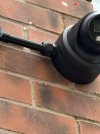
I’ve just noticed the installer ok some cameras has used what I think are couplers tha connect to the trunking and then the coupler screws in to the gland on the hikvision junction box.

On other cameras the trunking seems like it’s just going straight in to the gland on the hikvision junction box.

What’s the purpose of those couplers are they needed?
 

Attachments

  • IMG_6356.jpeg
    IMG_6356.jpeg
    1.8 MB · Views: 29
  • IMG_6355.jpeg
    IMG_6355.jpeg
    1.8 MB · Views: 24
@JB1970

Any help would be appreciated
TBH it's not critical as the camera is IP65 rated without the backbox.

In the second image the 20mm plastic conduit has a male adaptor fitted (exposed thread). The exposed thread on that adaptor would normally be inserted through the side of an enclosure with a locking on the inside of the enclosure to secure it. I guess that the installer just reamed the supplied 25mm gland entry out to 20mm and pushed the thread into the gland whereas on the first image the 20mm conduit passes straight into the supplied gland. Either way the 20mm conduit or the 20mm thread on the male adaptor go into the supplied gland so the fit is the same. It could be that the pipe was cut a tad short on image 2; adding the male adapter to the end of the conduit would add about 25mm in length and solve that issue.
 
TBH it's not critical as the camera is IP65 rated without the backbox.

In the second image the 20mm plastic conduit has a male adaptor fitted (exposed thread). The exposed thread on that adaptor would normally be inserted through the side of an enclosure with a locking on the inside of the enclosure to secure it. I guess that the installer just reamed the supplied 25mm gland entry out to 20mm and pushed the thread into the gland whereas on the first image the 20mm conduit passes straight into the supplied gland. Either way the 20mm conduit or the 20mm thread on the male adaptor go into the supplied gland so the fit is the same. It could be that the pipe was cut a tad short on image 2; adding the male adapter to the end of the conduit would add about 25mm in length and solve that issue.
Perfect thanks as always for your help.

Am I right in saying both are equally acceptable and there’s no case of one versus the other?
 
@JB1970

I’d like them all to be uniform but I just can’t understand how it goes together.

The adapter in the attached picture how does that go in to the junction box? I can’t see how it would screw in as it’s siginificsntly smaller?

Or is it just a case of the trunking is sort of wedged between

IMG_6395.jpeg
IMG_6394.jpeg
 
The Hikvision box is not natively designed to take a 20mm conduit. That's a female adapter (I'd guessed it was a male). It really does not matter.

If you want it to be 'correct' you'll need to source a 25 - 20mm reducer bush which you'll get from any electrical wholesaler/screwfix/toolstation (assuming the Hik box is a 25mm entry). That will screw into the Hikvision box in place of the supplied gland. you would then screw a 20mm male conduit adapter into that and push the pipe into it. But it really does not matter!
 
@JB1970 can I just confirm those female adapters whatever they are, do not provide any waterproofing properties? I think the waterproofing all comes from the shielding that’s around the Ethernet connector?
 
@JB1970 can I just confirm those female adapters whatever they are, do not provide any waterproofing properties? I think the waterproofing all comes from the shielding that’s around the Ethernet connector?
They are waterproof - plastic conduit when used with adapters is waterproof. As said in my first reply though, the camera is waterproof to IP65 and with the gland fitted on the RJ45 coupling you shouldn't have any issue. Some say to wrap that gland with self amalgamating tape but I never will and I've not had water get into a connector.
 
Back
Top